Engineering Excellence
Our Rovers
Every year we build a new rover from the ground up. Explore each generation below.
igNUS 2026
currentigNUS 2026 represents our most ambitious build to date. Featuring a rugged new chassis designed for the Utah desert terrain, a more versatile 6-DOF robotic arm, cutting-edge autonav with improved obstacle avoidance, advanced GNSS and communications systems, and an upgraded science payload capable of detecting signs of past or present life.
SAR Video
Subsystems
By Subteam
Chassis
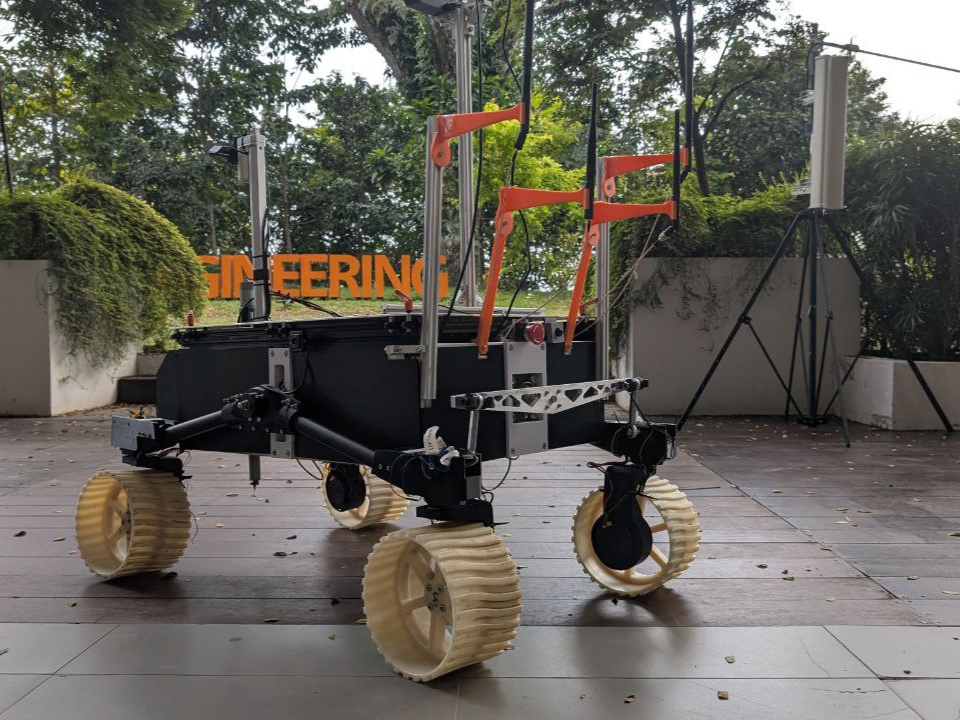
The Chassis subteam is responsible for designing and fabricating the rover’s structural frame and mobility system. For igNUS 2026, we developed a new chassis architecture optimized for the challenging terrain of the Utah desert. The design features a robust suspension system with increased ground clearance, allowing the rover to navigate rocky and uneven surfaces more effectively. We utilized lightweight materials and modular construction techniques to enhance durability while minimizing weight, ensuring that the rover can withstand the harsh conditions of the competition environment.
Robotic Arm
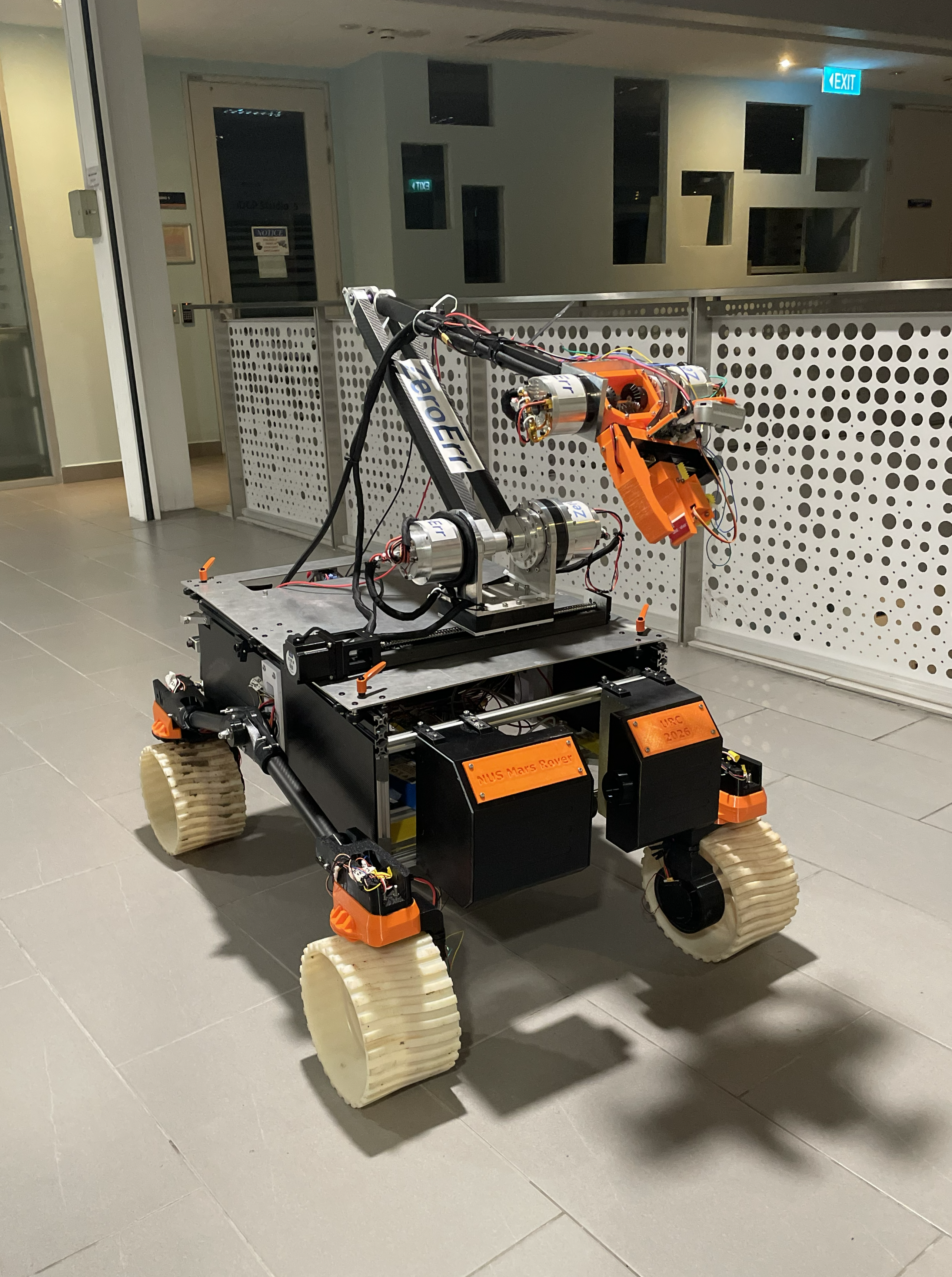
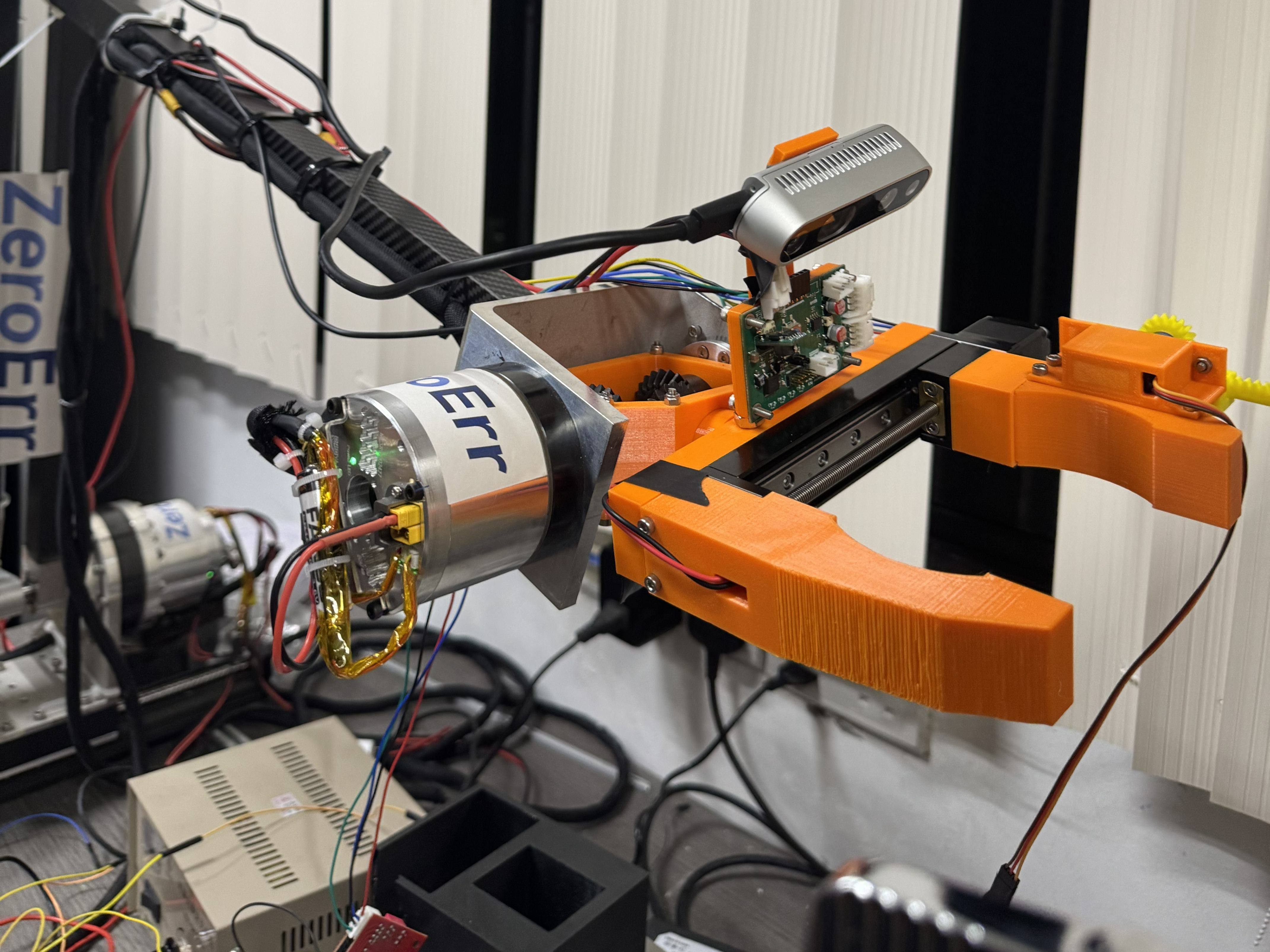
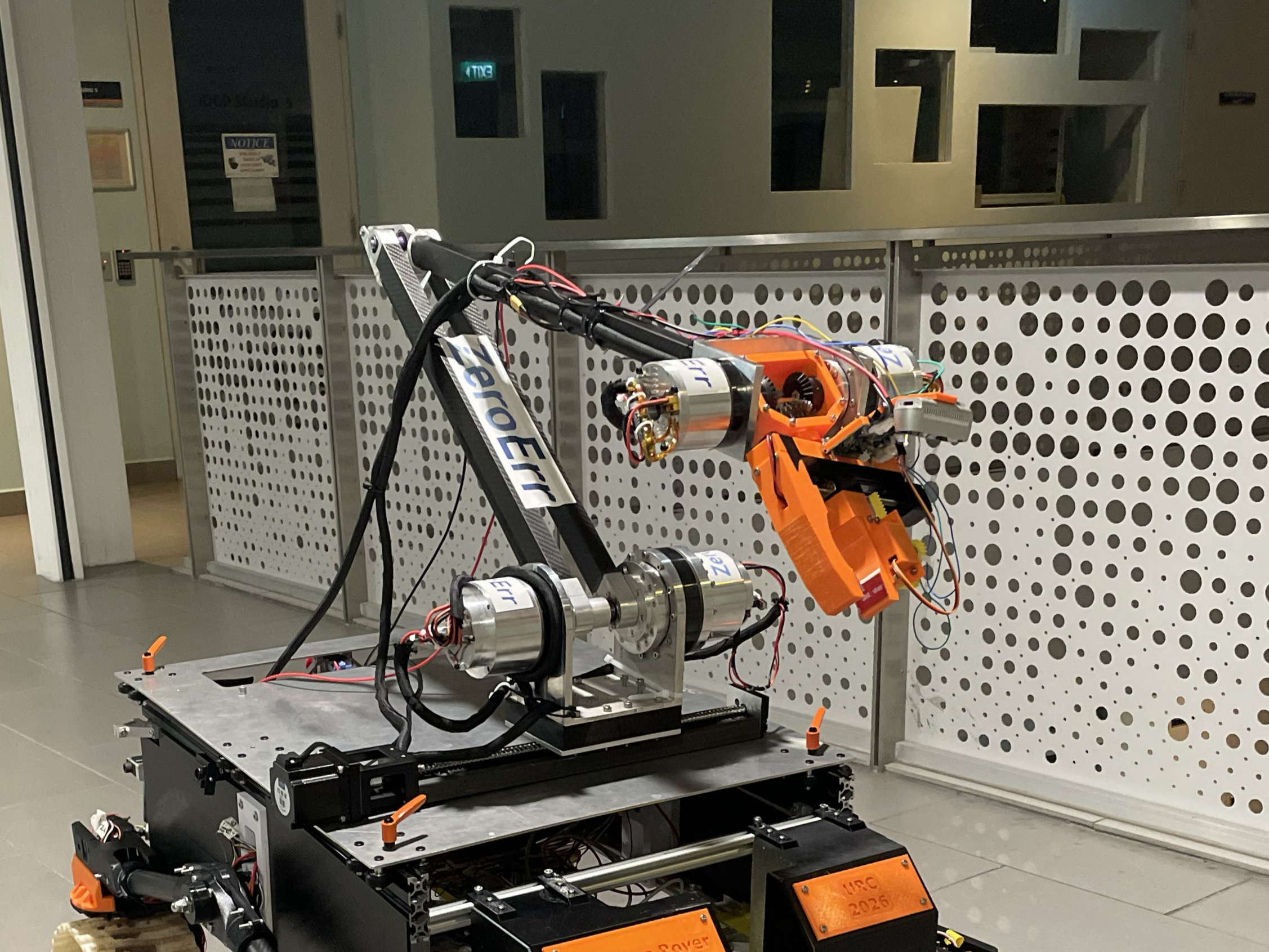
The Robotic Arm subteam is responsible for developing the rover’s primary manipulator. Our work encompasses mechanical fabrication, custom electronics, and software integration. The arm has 5 degrees of freedom, utilizing a 4-bar linkage. High-level control is managed by an NVIDIA Jetson Orin NX, while a custom STM32-based PCB on the end effector handles low-level actuation via CAN communication. Running on the ROS 2 framework, the software stack employs MoveIt 2 for trajectory planning and inverse kinematics. Advanced perception is provided by a depth camera mounted on the end effector, which uses ArUco markers for autonomous object recognition.
GNSS & Comms
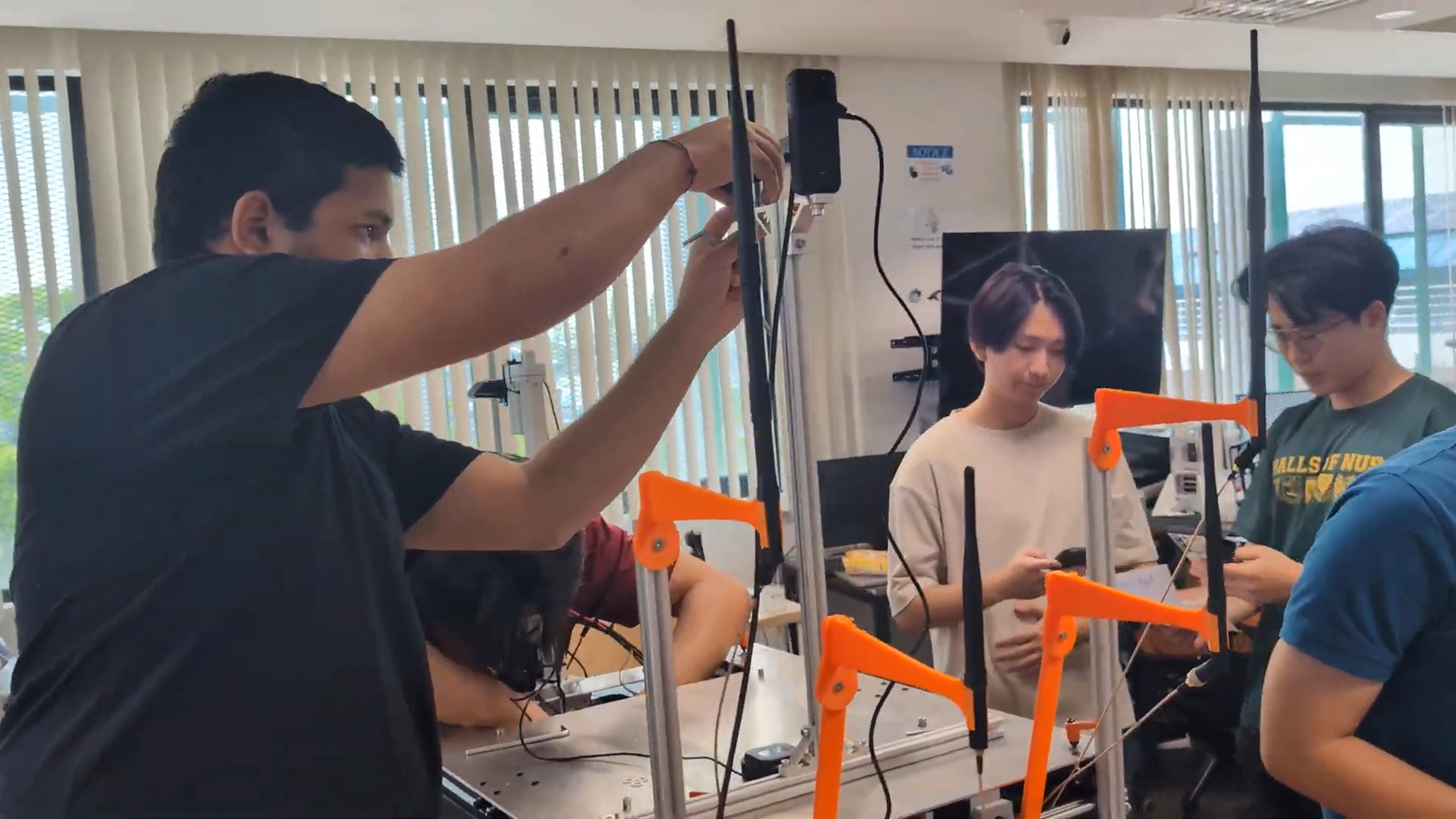
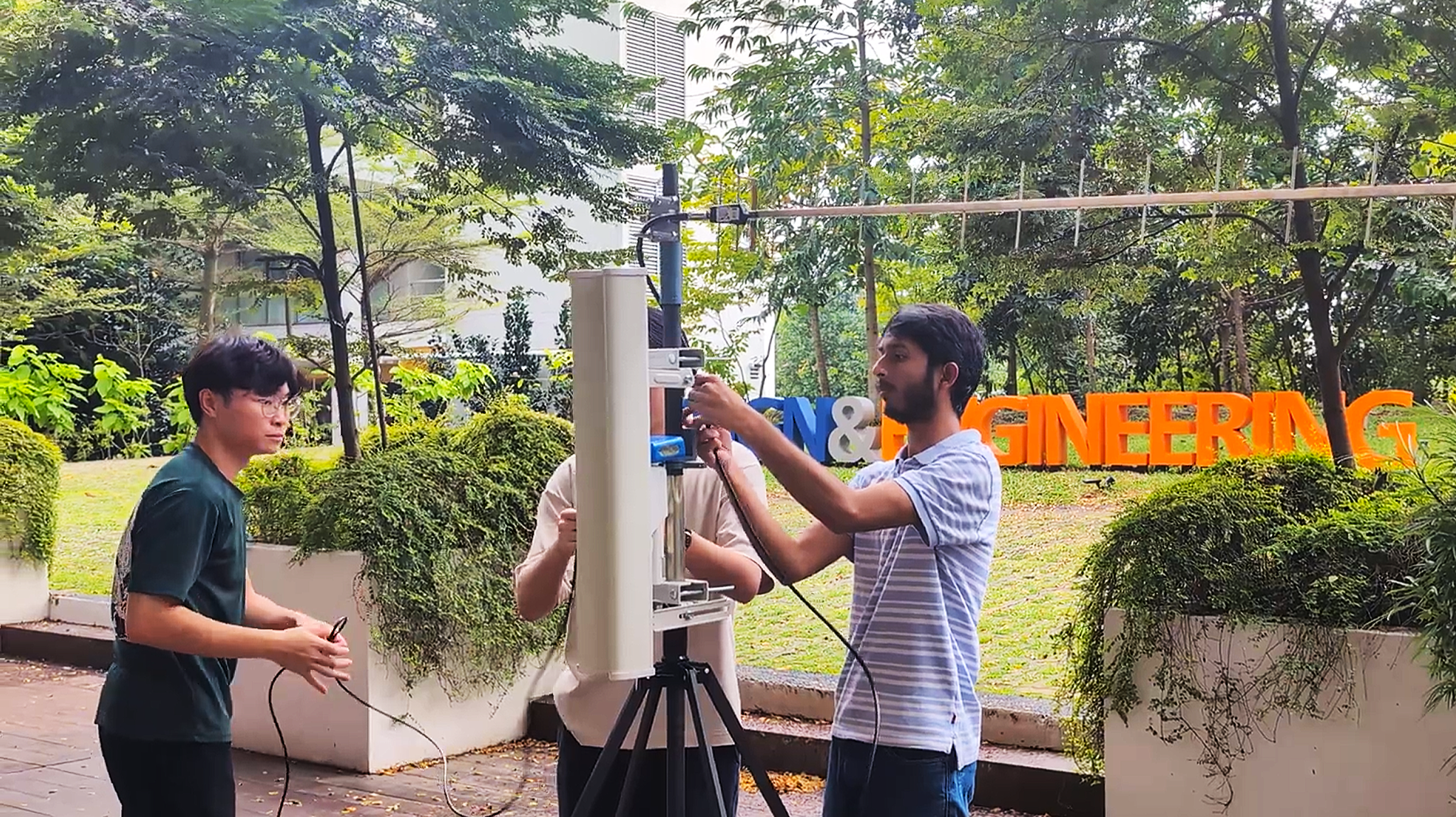
The communications team develops and integrates the rover’s wireless networking, positioning, and telemetry systems. We design and validate a dual-band RF system (2.4 GHz and 900 MHz), optimize links, select antennas, and implement automatic steering to maintain reliable long-range connectivity. We build custom PCBs for battery, power, and antenna motor control, enable low-latency UDP video streaming, and create a modular GUI that brings together live video, communication diagnostics, rover telemetry, as well as information from other subsystems, giving operators a unified platform to monitor and control the rover efficiently.
Science
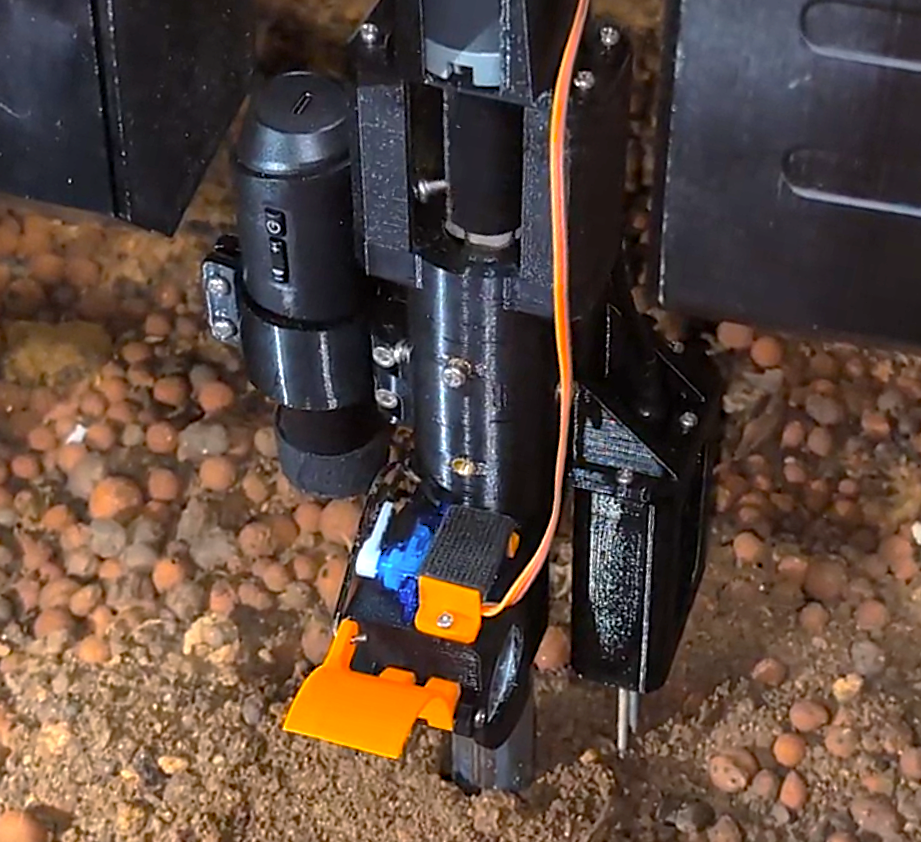
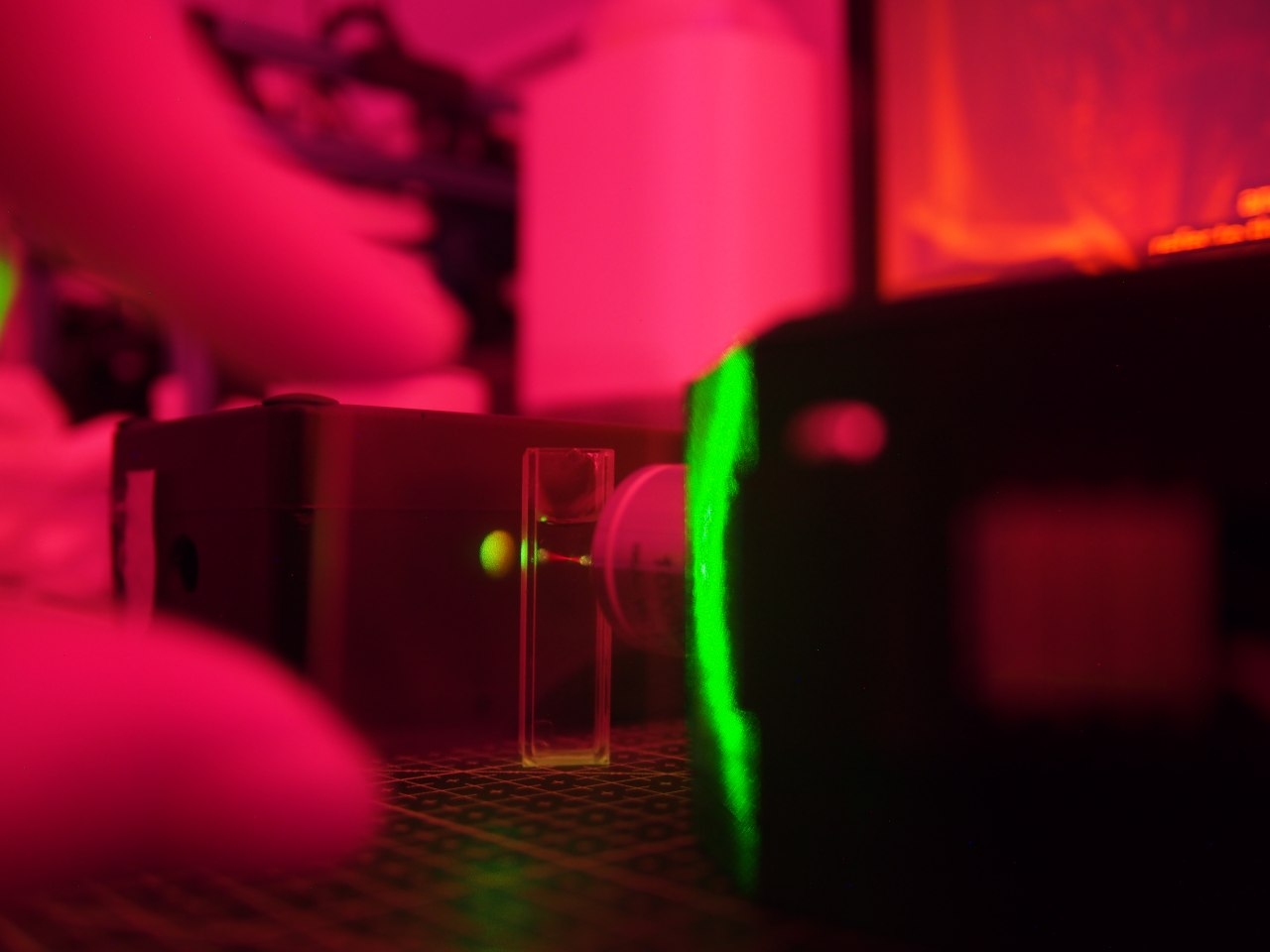
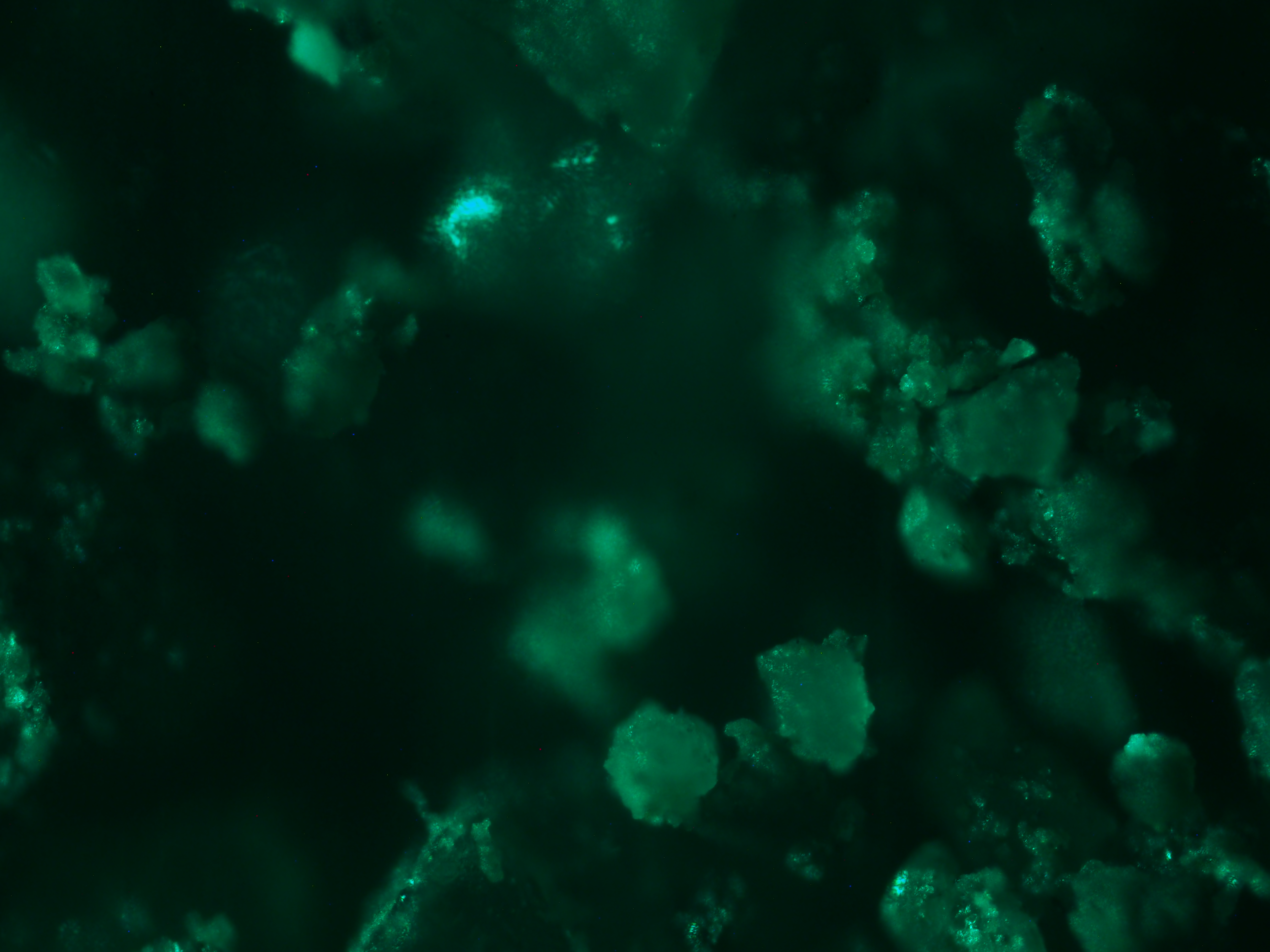
Our science subsystem looks for signs of life by leveraging a comprehensive soil drilling and caching system and two onboard, in-house developed scientific instruments, controlled and analyzed through the GUI. An auger drill bores 15cm into the ground and brings the soil up to a removeable cache with transparent windows and servo-actuated door. The UV fluorescence microscope with in built focus stacking then images the collected cache for autoflourescent biosignatures. Lastly, the Raman spectrometer shines a focused laser that allows for the resulting molecule specific spectral peaks to be read and identified.